Title Company in Bradenton & Sarasota: A Practical Closing Services Guide
 Most people do not wake up excited about choosing a title company. They simply want their purchase, sale, or refinance handled correctly, their money protected, their questions answered, and their closing completed without unpleasant last-minute surprises.
That is exactly the point.
Choosing an experienced title company in Bradenton and Sarasota can make an enormous difference in how smoothly a real estate transaction proceeds. A good closing company does much more than schedule a signing and collect signatures. It coordinates the transaction, examines title, identifies problems, communicates with the parties, handles escrowed funds, prepares closing documents, issues title insurance, and helps move the transaction from contract to closing.
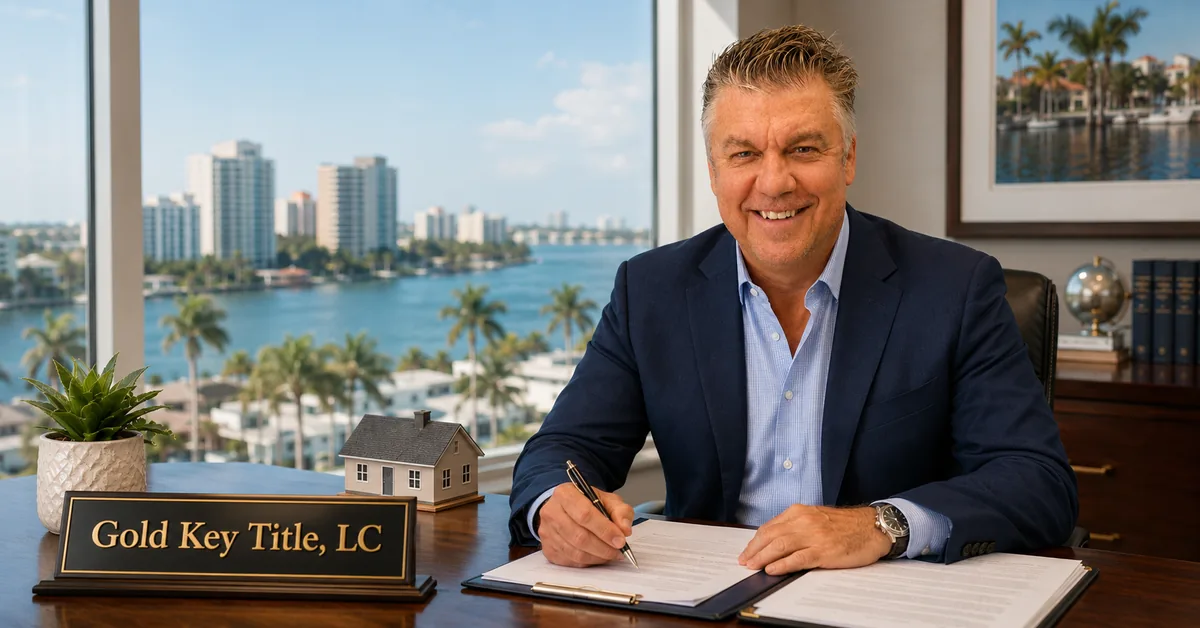
Gold Key Title, LC is an attorney-owned title company providing residential and commercial real estate closing services, title insurance, escrow, and settlement services throughout Bradenton, Sarasota, and surrounding communities in Manatee and Sarasota Counties.
What Does a Real Estate Title Company Actually Do?
A title company serves as a central point of coordination during a real estate transaction. Depending on the type of transaction and the terms of the contract, the title and closing company may be responsible for:
- Reviewing the purchase and sale contract
- Ordering and examining the title search
- Identifying liens, judgments, ownership issues, and other title defects
- Issuing a title insurance commitment
- Coordinating with buyers, sellers, real estate agents, lenders, attorneys, associations, and other parties
- Requesting mortgage, lien, tax, utility, and association payoff information
- Holding deposits and closing funds in escrow
- Preparing deeds, affidavits, settlement statements, and other closing documents
- Explaining the closing documents and obtaining the required signatures
- Receiving and securely disbursing closing funds
- Recording the deed, mortgage, and other instruments in the public records
- Issuing the final owner’s and lender’s title insurance policies
There are many moving parts, even in a transaction that initially appears simple. A missed lien, ownership question, incorrect legal description, unreleased mortgage, probate issue, open permit, association balance, or document error can delay closing or create a much larger problem later.
Our job is to find and address those issues before they become the buyer’s or seller’s post-closing surprise.
The Real Estate Closing Process, Explained in Plain English
Although every transaction is different, most Florida real estate closings follow several basic stages.
1. The Contract Is Delivered to the Closing Agent
Once the parties have signed the real estate contract, it should be delivered promptly to the selected title and closing company.
The contract identifies important deadlines, including the deposit deadline, inspection period, financing period, title-review period, and scheduled closing date. It also determines many of the parties’ responsibilities and closing expenses.
The sooner the closing agent receives the contract, the sooner the title work and closing coordination can begin.
2. The Title Search and Examination Are Completed
A title search examines the public records affecting the property and its ownership. The search may disclose mortgages, liens, judgments, easements, restrictions, prior conveyances, probate matters, unreleased interests, and other items that must be evaluated.
The title examination determines whether the seller appears able to convey the title required by the contract and identifies the conditions that must be satisfied before a title insurance policy can be issued.
A title search is not merely a search for the owner’s name. The legal description, chain of title, recorded instruments, and property-specific issues must all be examined carefully.
3. Title and Closing Issues Are Addressed
A title commitment identifies the proposed insured parties, the property, the requirements that must be satisfied before closing, and the exceptions that will apply to the title insurance policy.
Some requirements are routine. Others require additional attention.
For example, an old mortgage may have been paid years ago but never properly released. A deceased owner’s interest may require probate documentation. A judgment may belong to someone with a similar name. A trust, corporation, or limited liability company may need to provide documents confirming the authority of the person signing.
Finding an issue is only the beginning. The closing agent must determine what is needed to resolve it and coordinate the necessary documents, payments, releases, affidavits, or corrective instruments.
4. The Closing Is Coordinated With Everyone Involved
The title company communicates with the buyer, seller, real estate agents, lender, mortgage broker, attorneys, condominium or homeowners’ association, insurance professionals, surveyor, inspectors, and other parties whose information may be needed.
For a financed purchase, the lender and title company exchange loan, title, insurance, payoff, and closing information. For many consumer mortgage transactions, the lender provides the buyer with a Closing Disclosure before closing so the buyer can review the final loan terms and costs.
For a cash transaction, there may be no lender, but the title, escrow, document, and recording responsibilities remain important.
5. Closing Documents and Financial Figures Are Prepared
The closing agent prepares or coordinates the documents required to complete the transaction. Depending on the transaction, these may include:
- The deed
- Settlement statement or Closing Disclosure
- Seller’s affidavit
- Bill of sale
- Assignment documents
- Loan documents
- Entity authorization documents
- Tax and lien affidavits
- FIRPTA-related documents
- Association documents
- Escrow agreements
- Other property-specific instruments
The financial figures must account for the purchase price, deposits, loan proceeds, taxes, assessments, association charges, commissions, payoffs, title charges, recording fees, and other contractual expenses.
Questions should be raised and resolved before everyone is sitting at the closing table.
6. Documents Are Signed, Funds Are Disbursed, and Instruments Are Recorded
At closing, the required documents are signed and the closing agent confirms that the conditions for funding and disbursement have been met.
Once the transaction is ready to fund, the closing agent disburses the money according to the final settlement figures. The deed, mortgage, and other recordable documents are then submitted to the appropriate county public records.
After closing and recording, the final title insurance policies are issued in accordance with the title commitment and policy requirements.
What Is Title Insurance?
Title insurance protects against covered losses arising from defects, liens, or competing claims involving the property’s title that existed before the policy became effective.
Unlike homeowners’ insurance, which generally protects against future events such as fire or storm damage, title insurance primarily addresses covered problems connected to the property’s prior ownership and title history.
Examples may include:
- An undisclosed or unreleased lien
- A mistake in a prior deed
- A forged or improperly executed document
- An unknown ownership interest
- Certain unpaid taxes or assessments
- A claim by an heir or former owner
- A recording or indexing error
- A defect in the legal description
- A lack of authority by someone in a prior transaction
Coverage always depends on the language, exclusions, exceptions, conditions, and amount of the particular policy.
Owner’s Title Insurance and Lender’s Title Insurance Are Different
An owner’s title insurance policy protects the buyer’s ownership interest, subject to the policy terms. The premium is generally paid once, at closing, and the policy ordinarily continues while the insured owner or qualifying successors retain the covered interest.
A lender’s title insurance policy protects the mortgage lender’s secured interest. A lender will ordinarily require a lender’s policy when financing a purchase or refinance.
The important distinction is simple: the lender’s policy protects the lender. It does not replace an owner’s policy and does not insure the buyer’s equity merely because the buyer paid for it as part of the loan transaction.
Who Selects the Title Company in Florida?
The purchase and sale contract should be reviewed carefully because it generally determines who is responsible for selecting the closing agent and paying the owner’s title insurance premium.
Customs may vary by area, contract form, and transaction. As a general matter, the party responsible for paying the owner’s title insurance premium will often have the right to select the title and closing agent, subject to the contract and any applicable lender requirements.
The selection of the title company should not be treated as an afterthought. The closing agent will be handling important documents, sensitive personal information, escrowed deposits, loan proceeds, and the final disbursement of the purchase price.
What Should You Look for When Searching for a “Title Company Near Me”?
Proximity is helpful, but the nearest title office is not automatically the best choice.
When comparing title companies in Bradenton or Sarasota, consider:
Experience With Florida Real Estate Transactions
Florida real estate has its own contracts, title requirements, homestead considerations, documentary taxes, recording practices, association issues, and local customs. Experience matters when an issue does not fit neatly into a standard checklist.
Clear and Responsive Communication
You should be able to reach someone who understands your file. Buyers, sellers, agents, and lenders should not have to make repeated calls simply to learn whether a required item has been received or a problem has been addressed.
Careful Escrow and Wire Procedures
Real estate transactions involve substantial sums of money. Wire instructions and any requested changes should always be independently verified using trusted contact information.
Never rely solely on an unexpected email changing wiring instructions. When in doubt, stop and call the closing company at a telephone number you already know to be correct.
Ability to Handle More Than Routine Closings
Some transactions involve trusts, estates, corporations, limited liability companies, divorces, prior liens, code issues, foreign sellers, powers of attorney, commercial property, or unusual contract terms.
A company’s value becomes most apparent when something unexpected occurs.
Local Knowledge With Modern Closing Capabilities
A local office provides familiarity and accessibility, but today’s clients may also need electronic document delivery, remote coordination, overnight delivery, lender integration, or other flexible arrangements.
The objective is not technology for its own sake. It is a secure, organized, and convenient closing.
Residential Real Estate Closings
Gold Key Title handles residential purchases and sales involving:
- Single-family homes
- Condominiums
- Townhomes
- Vacant residential lots
- Investment and rental properties
- Second homes
- Refinances
- Cash purchases
- Transactions involving trusts or business entities
We work with buyers, sellers, real estate professionals, mortgage lenders, and other participants to coordinate the transaction and move it toward an orderly closing.
Commercial Real Estate Closings
Commercial transactions may require additional contract review, entity documentation, lien and title analysis, lease review, assignment documents, surveys, financing coordination, and property-specific due diligence.
Gold Key Title provides closing and title services for commercial property transactions, including offices, retail property, investment property, vacant land, and other business-related real estate.
Because commercial transactions vary considerably, early delivery of the contract and supporting documents is especially important.
For Sale by Owner Closings
A transaction without real estate agents still requires a written contract, title work, closing documents, financial calculations, escrow handling, signing, disbursement, and recording.
In fact, buyers and sellers in a For Sale by Owner transaction may need more guidance because there are no real estate professionals coordinating deadlines and communications.
Gold Key Title can assist with the closing process from contract preparation or review through the final transfer and recording of the property.
Refinance Closings
A refinance does not transfer the property to a new buyer, but it still requires title examination, lender coordination, payoff information, loan documents, signing, funding, and recording.
A prior owner’s title insurance policy may also be relevant in determining whether a reissue premium rate is available. Providing the prior policy early in the process can help the title company evaluate whether the transaction qualifies.
Why Choose an Attorney-Owned Title Company?
Many transactions close without a major legal complication. The value of experience becomes especially important when one arises.
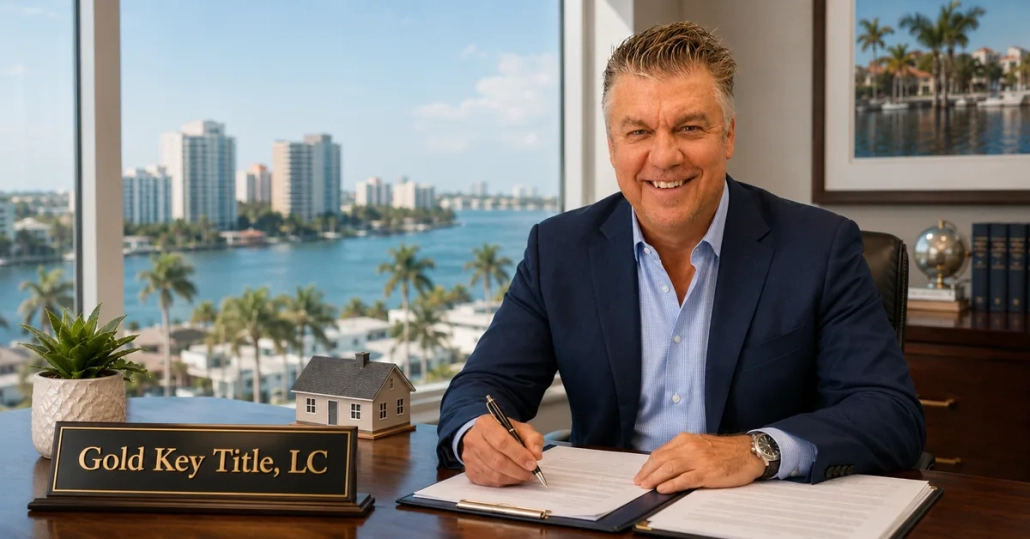
Gold Key Title, LC is attorney-owned and operated. Michael D. Wyckoff has more than 30 years of experience handling Florida real estate and business matters. That experience provides a practical legal perspective when reviewing contracts, examining title, preparing closing documents, and addressing issues that can affect a transaction.
We believe clients deserve clear explanations, prompt communication, careful work, and personal attention. No one should have to wonder where the closing stands, what they are signing, or whether an identified problem is actually being addressed.
Our objective is straightforward: protect the integrity of the transaction and help the parties reach a smooth, accurate, and successful closing.
Title Company and Closing Services in Bradenton, Sarasota – Local Closing Services
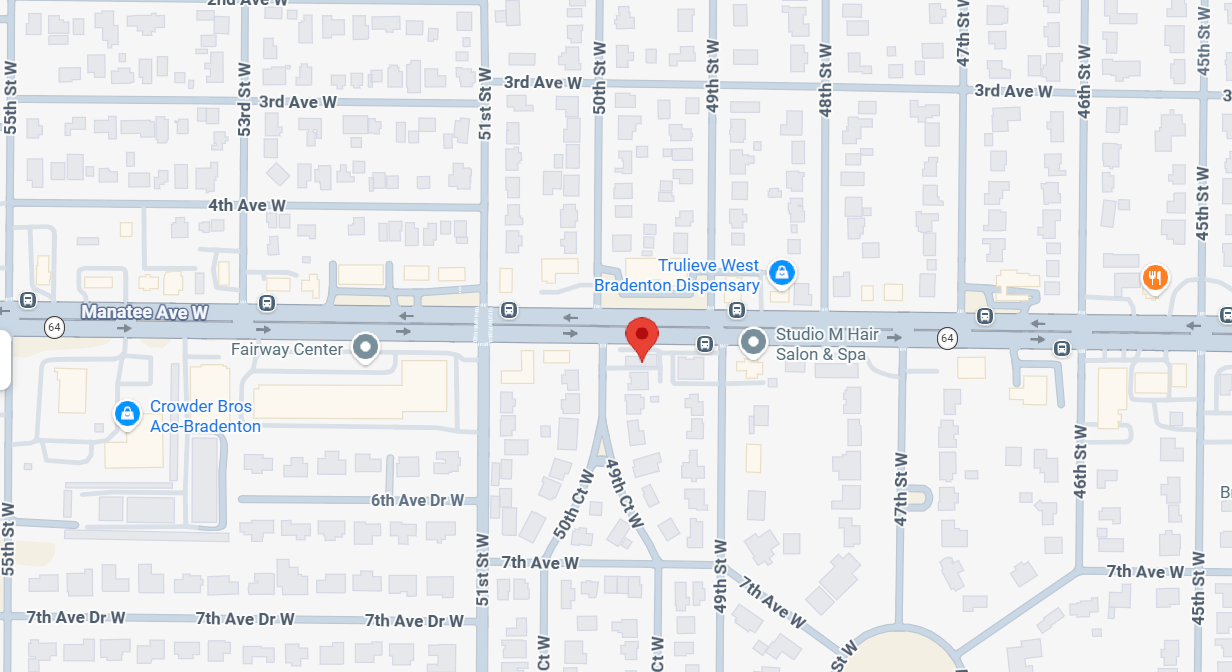
Gold Key Title provides title insurance and real estate closing services from offices in Bradenton and Sarasota.
Bradenton Office
4909 Manatee Avenue West
Bradenton, Florida 34209
Sarasota Office
1626 Ringling Boulevard, Suite 500
Sarasota, Florida 34236
Telephone for Both Offices: 941-795-5775
We serve clients throughout Manatee and Sarasota Counties, including Bradenton, Sarasota, Lakewood Ranch, Palmetto, Parrish, Longboat Key, Siesta Key, and surrounding Gulf Coast communities.
Speak With Gold Key Title About Your Closing
Whether you are purchasing, selling, refinancing, investing in commercial property, or handling a For Sale by Owner transaction, early communication with the title company can help identify questions before they become closing-day problems.
Contact Gold Key Title, LC at 941-795-5775 to discuss your Bradenton or Sarasota real estate closing.
This article provides general information and is not intended as legal advice regarding any particular transaction. The terms of the contract, title commitment, title insurance policy, and specific facts of each transaction control.